Land Clearing Services Across NSW, Backed by 38+ Years of Experience
Planned. Controlled. Site-Ready.
We provide land clearing across NSW, carried out with safety, compliance and future use in mind, preparing cleared sites for excavation, access, fencing or development.
Ready to Start Your Next Project?
Please call us for same day service
Our Land Clearing Services
Land clearing involves controlled vegetation clearing to make land usable, accessible and ready for development or ongoing management. The scope of clearing varies depending on the site, vegetation type, and intended outcome.
- Land clearing services may include:
- Removal of trees, scrub, and regrowth
- Clearing for building sites and house pads
- Access track and driveway clearing
- Fence line and boundary clearing
- Site preparation following vegetation removal
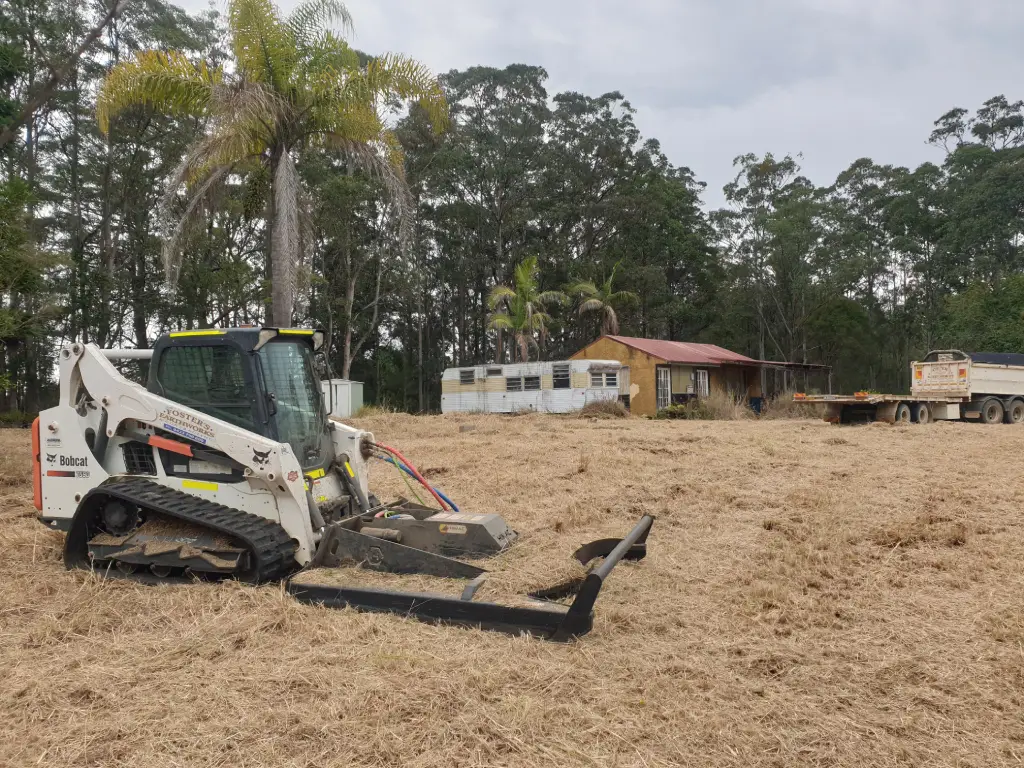
Our site clearing prepares building pads and access points ready for the next stage of construction.
Residential Land Clearing
Residential land clearing is commonly required when preparing a site for a new home, extension, or landscaping works. Overgrown vegetation, uneven ground, or restricted access may complicate building projects if not addressed early.
- Residential land clearing may include:
- Clearing for new home construction
- Backyard and acreage clearing
- Preparation for retaining walls, driveways, or fencing
- Managing regrowth on sloping or difficult blocks
Each residential site is cleared with consideration for surrounding properties, access limitations, and future landscaping plans.
Rural & Agricultural Land Clearing
Rural land clearing often focuses on improving access, managing vegetation growth, and maintaining usable land. These projects may involve larger areas, varying terrain, and different vegetation types.
- Rural land clearing services may include:
- Fence line and boundary clearing
- Track and access road preparation
- Paddock and property maintenance clearing
- Vegetation management around dams and infrastructure
Clearing methods are selected to suit the terrain and ongoing land use requirements.
Commercial & Development Land Clearing
Commercial and development land clearing supports construction, infrastructure, and large-scale site preparation. These projects often require careful coordination, staged clearing, and compliance with planning conditions.
- Commercial land clearing may involve:
- Clearing for building footprints and access
- Preparation for excavation and earthworks
- Machinery access and service corridors
- Coordination with construction timelines
Careful planning helps minimise disruption and supports a smooth transition into the next phase of work.
Environmental & Compliance Considerations
Land clearing in NSW is subject to environmental and council regulations, particularly where protected vegetation or sensitive land is involved. Understanding these requirements is essential before any clearing begins.
- Key considerations include:
- Council approvals and planning controls
- Protected vegetation and habitat restrictions
- Selective clearing where required
- Responsible disposal or reuse of cleared material
Clearing works are planned to align with applicable regulations and site-specific requirements.
How the Land Clearing Process Works
- Site Inspection & Scope Assessment – The site is assessed to understand vegetation type, access, terrain, and intended use.
- Compliance & Approval Review – Relevant council and regulatory requirements are reviewed before works proceed.
- Clearing Method Selection – Suitable clearing methods are chosen based on site conditions and scope.
- Controlled Clearing Works – Vegetation is removed in a planned and managed manner to reduce risk.
- Site Clean-Up & Preparation – Cleared material is managed, and the site is prepared for the next stage.
Why Choose This Land Clearing Service
38+ years of experience across residential, rural, and commercial land clearing
Full-service earthmoving and supplies handled in-house
Locally trusted by 990+ customers across the Mid North Coast
Licensed and insured on every job
Family-owned and community-focused
Each project is approached with care to ensure the land is cleared responsibly and ready for its intended use.
Land Clearing Service Areas
Land clearing services are available across the Mid North Coast of NSW, including Coffs Harbour, Nambucca Valley, Bellingen, Kempsey, and surrounding areas. Projects outside these locations may be assessed on request.
Frequently Asked Questions
Do I need council approval for land clearing?
Approval requirements depend on location, vegetation type, and scope of works. Some clearing activities may require council or environmental approvals.
Can you do selective land clearing?
Selective clearing may be carried out where only specific vegetation needs to be removed while retaining surrounding growth.
What happens to cleared vegetation?
Cleared vegetation may be mulched, removed, or managed on site depending on the project and regulatory requirements.
Is land clearing suitable for sloping blocks?
Land clearing may be carried out on sloping sites with appropriate planning and equipment.
How long does land clearing take?
Timeframes vary depending on site size, vegetation density, and access. This is usually confirmed after a site inspection.
Gallery